
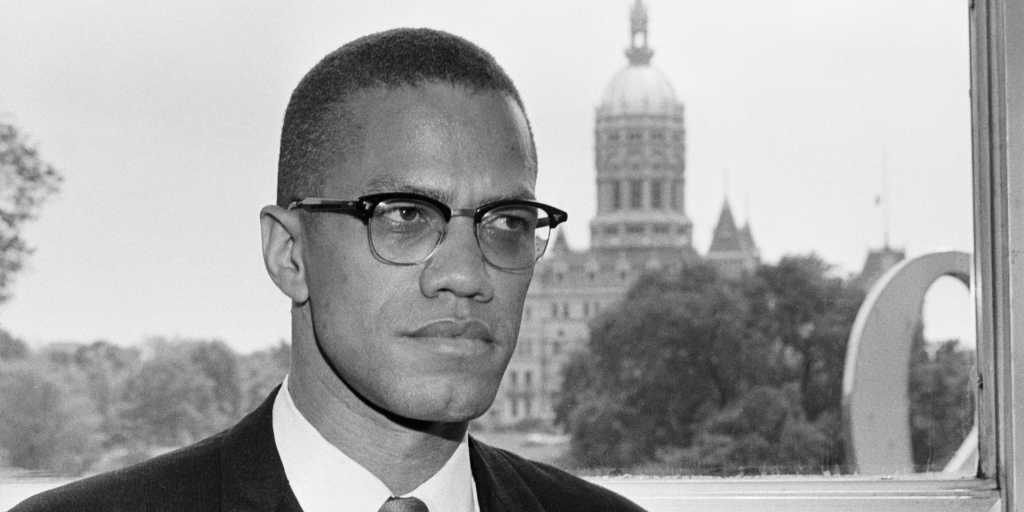
I will write something short here. I don’t have the frame of mind or the strength to do any deep analysis or commentary today. Maybe later in the future. I just need to get these thoughts down somewhere.
It took me a while to finish this book. I started it in August 2024 according to my reading tracker, which was probably bad timing because I was just beginning to sink into an intense reading slump. With this being a 500+ page book, I knew I likely wasn’t going to finish it in the duration I’d checked it out of the library for.
I’ve since borrowed it two more times. This last time, I finally read the remaining ~200 pages; the motivation of having this review blog has helped a lot with completing my desired reads.
It was enlightening to read about Malcolm X’s upbringing, to find out his original name and discover that he had a close family with many brothers and sisters, and to see who his parents were and what happened to them. Malcolm X says many times throughout the book that he always knew he’d die young and violently, similar to how his father was killed for his black uplift and antiracism efforts, and it’s disturbing to realize how much certainty he had about his death.
“It has always been my belief that I, too, will die by violence. I have done all that I can to be prepared.” (page 4)
I found out much about him that I didn’t know before or didn’t know the details of, such as how he was a train porter for a while, and a burglar and drug pusher, which he eventually went to prison for—ten years. I can only imagine how it must’ve been to live in Harlem in those days of the 1940s, surrounded by celebrities, music, drugs, dancing, and nightlife that would probably be hard for anyone to resist, all while trying to make it through the many difficulties of daily life.
Honestly, he was hilarious. There are so many turns of phrase in this book that are familiar and humorous; nothing feels too lofty or inaccessible because of copious academic speech. Yet, it’s still clear he was a very intelligent man.
This book is easy to get immersed in due to Malcolm X’s distinct voice. This quality also comes through due to the adeptness of Alex Haley’s storytelling, and his ability to bring the man to life on the pages. Once Malcolm X is killed, there is an emptiness that permeates the Epilogue. He was there, and then he was no longer. It’s hard to describe. Everything feels cold. Everything feels somewhat hopeless. (Especially reading this in our present day.) Malcolm X has been dead since 1965, but it’s almost like his assassination happens all over again, with a certain freshness.
When I was reading this book, I could hear Malcolm X reading it all himself, in his voice. I could imagine hearing him and seeing him do all these things. Once he is gone and the story is told purely in Alex Haley’s recounting of the aftermath, it’s like Malcolm X’s spirit itself fled from the pages of the book. His absence occurred in such a visceral, almost tangible way that it made me realize that he had been present, all the time, in all the previous chapters.
I wonder often what life would’ve been like, what the world would’ve been like, if Malcolm X had survived into old age. What he’d think of the increasingly racist and hate-filled state of the U.S. and many of the people in it. Or if he had lived, would we have gotten to this point at all? I don’t know.
“Sometimes, I have dared to dream to myself that one day, history may even say that my voice—which disturbed the white man’s smugness, and his arrogance, and his complacency—that my voice helped to save America from a grave, possibly even a fatal catastrophe.” (page 413)

Leave a comment